
Ha pasado ya un mes desde la última entrada, y es que un mes como noviembre en el hemisferio norte, es muy desafiante para una familia donde habita la Discinesia Ciliar Primaria/ Síndrome de Kartagener. Aunque, si lo pienso, por delante vienen diciembre, enero, febrero… se me queda la cara hecha un cuadro, uno de terror…

El grito, Munch.
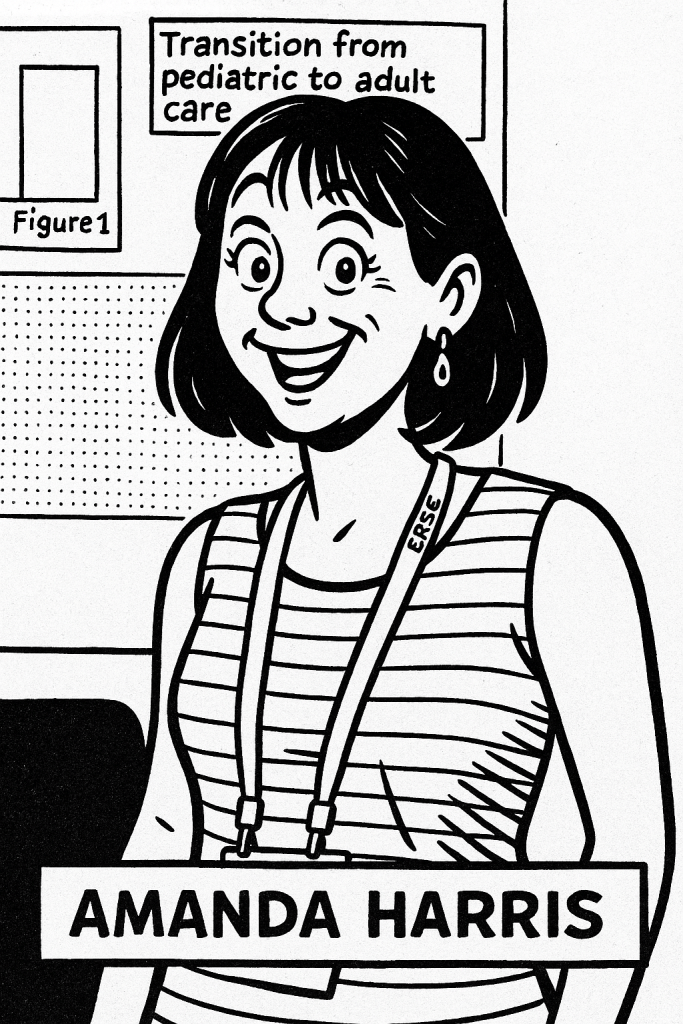
Sin embargo, a principios de diciembre y con las vacaciones de invierno de los niños por delante, tenemos que intentar sacar la energía más navideña posible, y agradecer que en la Conferencia Europea de pacientes con DCP (hospedada como siempre por el BEAT PCD el 29 de noviembre de 2025) pudimos disfrutar de la experiencia profesional de la investigadora y enfermera del National Health Service de UK, Amanda Harris.
LA TRANSICIÓN DESDE LOS SERVICIOS PEDIÁTRICOS A LOS SERVICIOS DE ADULTOS EN LOS ADOLESCENTES CON DCP
Fue el mejor regalo navideño que a las madres y a los padres de infantes con DCP nos podían hacer. Ya, ya…lo entiendo… no es la molécula que hará mover los cilios a nuestros peques, pero Harris nos presentó el verdadero impacto en la salud de hacer una buena TRANSICIÓN en DCP desde pediatría a los cuidados de adulto.
Pese a que todos podemos tener claro que es un momento «puente» importante, porque ni pertenecen estrictamente a la edad pediátrica, ni muchos menos son adultos, no sé si realmente podemos imaginar la «aventura» (por darle un toque «no muy dramático») que puede ser convivir con discinesia ciliar en este delicado periodo de tiempo. Y aún más allá, es muy posible que no sepamos en su totalidad cómo afecta este tránsito a su calidad de vida posterior.
En breve la Conferencia estará colgada en el canal de YouTube del mencionado consorcio (BEAT-PCD – YouTube ) y podréis escuchar la magnífica intervención de los dos ponentes encargados del tema. Además os facilito aquí mismo el enlace a las diapositivas en cuatro idiomas, español entre ellos: Conferencias para pacientes de PCD — BEAT-PCD . Por lo tanto no haré un resumen de la charla más allá de las ideas más reveladoras para mí, pues espero y recomiendo muy en firme que la escuchéis.
MENSAJES DE AMANDA QUE METÍ EN MI MOCHILA DCP
- La transición comienza a trabajarse desde poco después del diagnóstico y con la familia al completo, porque transita el afectad@ pero también el rol de los padres, y ellos mismos.
- La transición sucede en todas las esferas de la vida del adolescente, no solo respecto a la DCP ni en el plano estrictamente clínico. Si no se tiene en cuenta al adolescente de forma holística, y no se le engancha desde su identidad y sus deseos, como señala Harris, la DCP probablemente no será una prioridad para él/ella.
- La transición no es un procedimiento médico, no es cambiar de hospital, es un periodo existencial, en el que un joven con una enfermedad rara decide —o no decide, pero se ve arrastrado— a ocupar su propio nombre dentro del sistema. Requiere un esfuerzo importante de medios, de tiempo y formación para los profesionales sanitarios que lo atienden pero cada minuto dedicado a una actividad de un programa de transición son bastantes exacerbaciones menos, muchos menos ingresos, menos ingesta de antibióticos y mejor conservación de la función pulmonar.
- El programa presentado por los ponentes es el Ready- Steady- Go : Transition: moving into adult care – patient information (aquí podéis descargar la información sobre el programa en español). También adjunto como ejemplo el cuestionario final del programa, pero cada etapa tiene su propio cuestionario y sus herramientas.
- El programa abarca distintas secciones a través de las cuales en realidad se pretende avanzar en el conocimiento respecto a la DCP, habilidades para gestionar los escenarios derivados y la confianza en uno mismo y sus opciones. Me parecen unas cualidades muy pertinentes y acertadas para saber llevar una enfermedad crónica , y en nuestro caso, minoritaria también.
- No entraré en detalles técnicos, pero sí diré que de las secciones trabajadas: conocimientos de la enfermedad, autodefensa, salud y estilo de vida, educación y carrera profesional, aspectos psicosociales y transición, lo que más llamó mi atención fue la gran insistencia de Harris en la orientación profesional de los niños y niñas. Pone como ejemplo las fuerzas armadas del Reino Unido, que no admiten a personas con DCP u otras patologías, y ha sido muy doloroso y frustrante para algunos adolescentes que aspiraban a unirse al ejército, saber que no podrían realizar su sueño.
Y quizás uno de los mensajes más importantes que Amanda nos regaló fue el hacernos conscientes a los padres y madres de que los documentos Ready-Steady-Go están ahí para orientarnos en los temas a trabajar a nosotros también. Si no tenemos la fortuna de tener una asistencia sanitaria en condiciones para este periodo de tiempo, nosotros mismo podemos hacer uso de las herramientas propuestas y empoderar a nuestros futuros jóvenes PCDers.
Post Data: Ya estoy viendo la cara de mi amiga Bea ante la injustificable reiteración de la palabra «transición» en la actual entrada. Beatriz… ya sabes que cambio cuanto me digas 😉

A month has already passed since the last post, and the truth is that a month like November in the northern hemisphere is very challenging for a family where Primary Ciliary Dyskinesia/Kartagener Syndrome lives. Although, if I think about it… with December, January and February still ahead… my face turns into a picture, a horror painting…
However, as early December arrives — and with the children’s winter holidays just around the corner — we have to try to summon whatever Christmas energy we can find and be grateful that, at the European PCD Patient Conference (hosted, as always, by BEAT-PCD on 29 November 2025), we were able to enjoy the professional experience of NHS (UK) researcher and clinical nurse specialist Amanda Harris.
THE TRANSITION FROM PAEDIATRIC TO ADULT CARE IN ADOLESCENTS WITH PCD
It was the best Christmas gift that parents of children with PCD could possibly receive.
I know, I know… it’s not the molecule that will make our little ones’ cilia beat — but Harris showed us the real impact that a good TRANSITION from paediatric to adult care can have on health outcomes.
Even if we all understand that it’s an important “bridge” moment — because they no longer fully belong to paediatrics, but are certainly not adults — I’m not sure we can truly imagine the “adventure” (to keep it from sounding too dramatic) that living with Primary Ciliary Dyskinesia can be during this fragile period of life. And beyond that, it’s very likely that we don’t yet fully grasp how this transition affects their later quality of life.
The Conference will soon be available on the YouTube channel of the consortium (BEAT-PCD – YouTube), and you’ll be able to watch the excellent presentations given by the two speakers addressing this topic. I am also sharing here the link to the slides, which are available in four languages, including Spanish: PCD Patient Conferences — BEAT-PCD.
Therefore, I won’t summarise the entire talk — only the ideas that were most revealing to me — because I hope, and strongly recommend, that you listen to it yourselves.
MESSAGES FROM AMANDA THAT I PUT INTO MY “PCD BACKPACK”
Transition begins shortly after diagnosis and involves the whole family,
because the young person transitions, yes, but so do the parents and their roles — and even their identities.
Transition happens across every sphere of an adolescent’s life,
not only in relation to PCD nor exclusively within the clinical setting.
If we don’t approach the young person holistically — and if we don’t reach them through their identity and their desires — then, as Harris points out, PCD is unlikely to become a priority for them.
Transition is not a medical procedure; it is not simply changing hospitals.
It is an existential period in which a young person with a rare disease decides — or doesn’t decide, but is nevertheless pulled — to step into their own name within the system.
It requires significant resources, time, and training for the professionals involved, but every minute invested in a structured transition programme translates into fewer exacerbations, fewer hospital admissions, fewer courses of antibiotics, and better preservation of lung function.
The programme presented by the speakers was Ready–Steady–Go: Transition — moving into adult care (here you can download the information in Spanish). I am also attaching the final questionnaire of the programme, though each stage has its own tools and questionnaires.
Final Ready–Steady–Go questionnaire in Spanish – Download
The programme covers different sections through which young people are meant to progress:
knowledge of PCD, self-advocacy, health and lifestyle, education and career planning, psychosocial aspects, and transition.
These seem to me extremely relevant and well-targeted skills for managing a chronic — and in our case, also rare — condition.
I won’t go into technical detail, but I will say that among all the sections, what caught my attention most was Harris’s strong emphasis on career guidance.
She gave the example of the UK armed forces, which do not accept applicants with PCD or other medical conditions.
For some teenagers who had dreamed of joining the military, learning that they could not pursue that path was deeply painful and frustrating.
And perhaps one of the most important messages Amanda gave us was helping parents realise that the Ready–Steady–Go documents are also there for us.
If we are not fortunate enough to have a robust healthcare team guiding this process, we ourselves can use these tools and empower our future young PCDers.
P.S. I can already picture my friend Bea’s face at the unjustifiable repetition of the word “transition” in this post.
Beatriz… you know I’ll change whatever you tell me 😉
 PCD and Friends
Deja un comentario